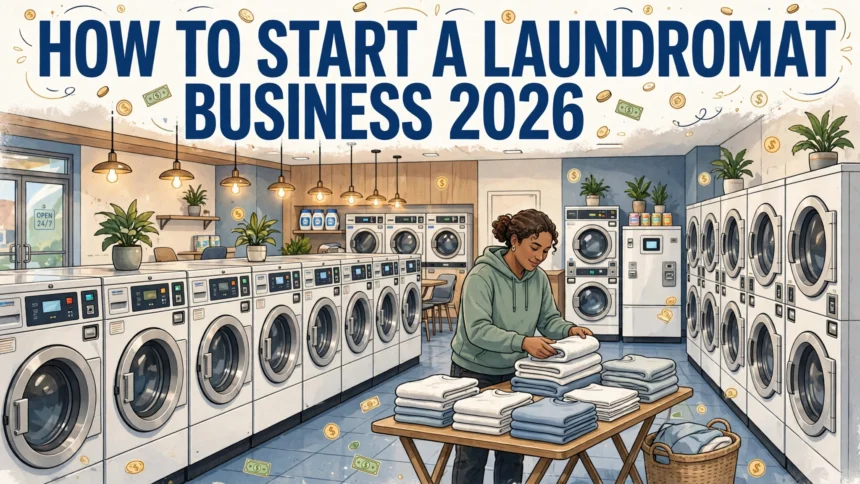
Learning how to start a laundromat business in 2026 is a realistic path into entrepreneurship for people who want steady, semi-passive income without inventing a new product. Laundromats serve a need that never goes away: millions of renters, students, and busy families rely on shared laundry facilities every week. The business is cash-based, needs no inventory in the traditional sense, and can run with limited staffing once it is set up properly. This guide walks through every stage, from understanding the real startup costs to choosing a location, financing the purchase, buying equipment, handling permits, and marketing your store so the machines stay full.
- Why a Laundromat Still Makes Sense in 2026
- How Much Does It Cost to Start a Laundromat in 2026?
- Step One: Research Your Market Before You Spend a Dollar
- Step Two: Write a Business Plan a Lender Will Respect
- Step Three: Secure Financing That Fits Your Budget
- Step Four: Choose a Location That Drives Foot Traffic
- Step Five: Buy Equipment and Plan the Build-Out
- Permits, Licenses, and Utilities You Cannot Skip
- Marketing, Extra Revenue, and Avoiding Costly Mistakes
- Conclusion
Why a Laundromat Still Makes Sense in 2026
A laundromat business works because demand is built into daily life. Renters without in-unit machines, college students, and large families all need somewhere to wash and dry clothes, and that demand does not disappear in a recession. It is a service people cannot easily postpone, which makes revenue more predictable than in many small businesses. Operations are simple too: no perishable stock and no complex supply chain.
The financial profile is attractive. Industry observers describe laundromats as cash-flow-positive businesses with strong margins once the initial investment is paid down, since ongoing costs are mostly utilities, rent, and maintenance. Modern payment systems now accept cards and mobile payments, reducing the hassle of coin-only operations. The startup phase is demanding, but for a patient owner the long-term picture is genuinely appealing.
How Much Does It Cost to Start a Laundromat in 2026?
Startup costs for a laundromat in 2026 typically range from 200,000 to 500,000 dollars depending on location, size, equipment, and renovations. A detailed 2026 breakdown for a standard 2,000 square foot store puts the range at roughly 226,500 to 587,000 dollars. Equipment is the biggest line item: twenty to thirty commercial washers and dryers cost 150,000 to 350,000 dollars new, though used machines cut that substantially. The build-out comes next, with plumbing, electrical work, and venting running 50,000 to 150,000 dollars.
Beyond those, budget for lease and deposit, payment systems, furniture and signage, permits, and initial marketing. Most important is working capital: keep 10,000 to 30,000 dollars in reserve for three to six months of operating expenses while the customer base builds. Underestimating the cash buffer is one of the most common reasons new stores struggle early.
Step One: Research Your Market Before You Spend a Dollar
Market research comes before everything else, because a great store in the wrong neighborhood will fail no matter how nice the machines are. Map the existing laundromats in your target area and visit them as a customer. Notice their pricing, machine condition, cleanliness, hours, and how busy they are at different times of day. Areas with dense renter populations or student housing are classic strong territories, while neighborhoods already served by several modern stores may be saturated.
Talk to potential customers and local business owners about unmet needs. Perhaps existing stores are dirty, close early, or only take coins, and a clean, modern, card-friendly store would win loyalty quickly. This work directly shapes your business plan and financing application, since lenders want evidence of real demand before funding a six-figure project.
Step Two: Write a Business Plan a Lender Will Respect
A serious business plan is non-negotiable if you need a bank loan. Describe your target market, the competitive landscape, your pricing strategy, and your marketing approach in plain, specific language. Include detailed financial projections: startup costs, monthly operating expenses such as rent, utilities, insurance, and maintenance, and a realistic revenue forecast based on machine counts and local pricing. Base projections on research rather than optimism.
Cover your management approach too: staffing, hours of operation, and maintenance. If you plan extra services such as wash-and-fold or pickup and delivery, describe them with their expected margins. A thorough plan does more than unlock financing: it forces you to think through every operational decision before money is on the line, when mistakes are cheapest to fix.
Step Three: Secure Financing That Fits Your Budget
Most new owners do not pay for a laundromat out of pocket, and several financing routes are well established. The most common is an SBA 7(a) loan, which suits laundromats because they are asset-heavy, cash-flow-positive businesses that lenders find easy to underwrite. These loans can cover the purchase and the build-out, though they require a solid business plan, decent credit, and usually a down payment. Many washer and dryer manufacturers also offer direct equipment financing on the machines themselves.
If you are buying an existing laundromat, ask about seller financing, where the current owner finances part of the sale price. This can significantly reduce your bank loan and often brings a smoother transition, since the seller has an interest in your success. Some owners combine personal savings with a smaller bank loan. Compare the total cost of each option, including interest and monthly payments, before committing.
Step Four: Choose a Location That Drives Foot Traffic
Location is the biggest determinant of a laundromat’s success. Look for high visibility on a busy street, easy parking, and proximity to dense renter populations or student housing. Good lighting and a safe, welcoming feel matter enormously, because many customers do laundry in the evening and choose stores where they feel comfortable waiting. Limited direct competition nearby is ideal, though a poorly run competitor can be an opportunity.
Work with a commercial agent who understands laundromat needs: water pressure, drainage, gas lines, and electrical capacity. Negotiate a long lease with renewal options to protect your build-out investment. Check zoning rules early, since not every commercial space is approved for laundry use.
Step Five: Buy Equipment and Plan the Build-Out
Equipment selection shapes your costs, utility bills, and customer experience for a decade or more. You need commercial washers and dryers in a mix of sizes, from standard machines to large-capacity units for comforters and family loads. Modern energy-efficient machines cost more upfront but significantly reduce water and electricity expenses, among your largest ongoing costs. Pair them with a payment system that accepts cards and mobile payments, since customers increasingly expect cashless options.
The build-out is a construction project: commercial plumbing, drainage, gas lines, heavy electrical work, ventilation, and durable flooring. Get multiple quotes from contractors experienced with laundromats, because inexperienced builders underestimate the infrastructure involved. A clean, bright, safe store will outperform a cramped, dim competitor with identical machines.
Permits, Licenses, and Utilities You Cannot Skip
Every laundromat needs a basic business license, plus additional permits that vary by state and municipality. Expect water and sewer permits, and possibly health and safety permits depending on local rules. Staffed wash-and-fold services may trigger extra health or business permits. Check zoning approval for laundry use before signing a lease, since discovering a zoning problem after the build-out starts is an expensive mistake.
Utilities deserve their own planning as a major ongoing expense. Laundromats consume large amounts of water, gas, and electricity, so negotiate commercial rates where possible and invest in efficiency from day one. Set up monitoring so you can spot leaks or malfunctioning machines quickly, because a running toilet or a stuck machine quietly burns money.
Marketing, Extra Revenue, and Avoiding Costly Mistakes
A grand opening promotion is the fastest way to fill your store with first-time customers who can become regulars. Offer discounted wash days and loyalty programs, and list the store correctly on Google with strong photos and reviews. Neighborhood-targeted social media and simple signage all cost little and compound over time. The most powerful marketing is a spotless store: cleanliness is the number one thing laundry customers notice.
Extra services can transform the economics. Wash-and-fold, pickup and delivery, and commercial accounts with local businesses add high-margin revenue on top of self-service income. Free Wi-Fi, vending machines, and comfortable seating keep customers in the store longer. The costly mistakes to avoid are predictable: underestimating startup costs, skipping the cash reserve, neglecting maintenance, and ignoring utility bills.
Conclusion
Starting a laundromat business in 2026 takes serious capital, typically 200,000 to 500,000 dollars, and serious preparation: market research, a lender-ready business plan, the right location, efficient equipment, and proper permits. The reward is a business with durable demand, simple operations, and strong cash flow once established. Financing options such as SBA loans, equipment financing, and seller financing make the entry cost manageable for determined first-time owners.
Go in with realistic numbers, a cash buffer for the early months, and a commitment to cleanliness and maintenance. The owners who succeed treat it as a real business from day one: researched, financed carefully, and run with the customer experience at the center. Do that, and the machines will take care of the rest.
Success stories like Guy Fieri’s $130M empire show what steady business-building can achieve — read his story here.